What Tung Chung East Reveals About Robotic Concrete Levelling in Major Infrastructure Projects
Large infrastructure projects do not only require high daily output. They also need consistent elevation, controlled drainage slopes and reliable performance across changing outdoor conditions.
A recent robot deployment at Hong Kong’s Tung Chung East development provides a useful example of how robotic concrete levelling can support this type of work.
A Major Infrastructure Project in Hong Kong
The Tung Chung New Town Extension is one of Hong Kong’s major development programmes. According to the Hong Kong Civil Engineering and Development Department, the project includes approximately 130 hectares of reclaimed land at Tung Chung East.
Its wider scope covers roads, drainage and sewerage systems, waterworks, utility tunnels, pumping stations, cycle tracks and environmental mitigation works. The full development is being delivered in phases, with infrastructure work scheduled to continue toward 2030.
A Practical Application of Robotic Levelling
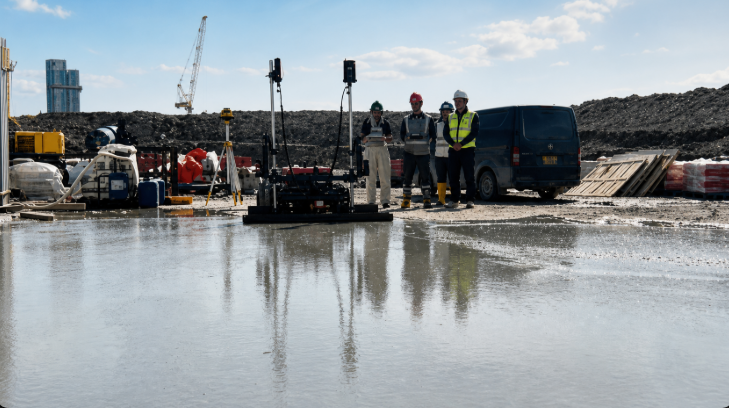
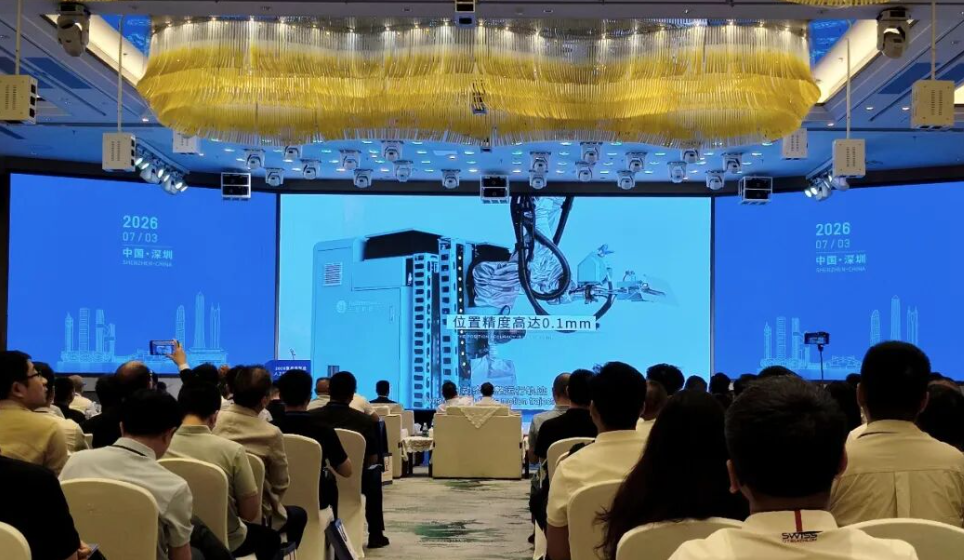
In July 2026, Fangshi Robotics announced that a ZP-415A laser ground levelling robot had been delivered to an infrastructure worksite at Tung Chung East.
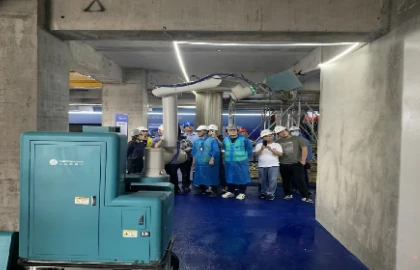
According to the manufacturer, the robot was used in open reclaimed areas and on sloped road surfaces. These applications required more than producing a flat floor. The equipment also needed to maintain designed gradients so that the completed surface could support effective drainage.
The manufacturer reported that the robot had completed approximately 6,000 square metres of work, with a further 16,000 square metres planned. It also reported a 100% first-pass acceptance rate and labour cost savings of more than 60% during the completed work.
Accurate Slope Control Matters
Many industrial floors are designed to be level, but infrastructure surfaces frequently require controlled gradients.
Roads, external platforms, car parks and drainage areas may need a central high point, lower edges or a defined fall toward drainage outlets. Small inconsistencies across a large area can lead to water accumulation, additional manual correction and increased rework.
Laser-guided levelling robots can help operators maintain the required elevation and slope more consistently than repeated manual checking and adjustment.
Outdoor Reliability Is as Important as Speed
A high production rate has limited value if a machine cannot operate reliably in heat, dust or large exposed work areas.
For outdoor infrastructure projects, contractors should consider the robot’s mobility, control system, operating stability, maintenance requirements and ability to work continuously under local site conditions.
The Tung Chung East application also shows why testing a robot in the actual working environment is important before expanding its use across a larger area.
Training Is Part of the Robotic Solution
Equipment delivery alone does not guarantee successful automation.
The original project report describes operator instruction, practical machine training, performance testing and daily maintenance guidance. This is an important part of introducing any new construction robot.
Site teams need to understand machine setup, calibration, cleaning, routine inspection and basic troubleshooting. Good training reduces operating mistakes and helps the contractor obtain consistent results after the supplier’s technical team leaves the site.
Choosing a Concrete Levelling Robot
Before selecting a robot, project teams should evaluate:
-
Total working area and expected daily output
-
Required flatness and elevation tolerances
-
Designed drainage slopes
-
Concrete mix and working time
-
Site access and ground conditions
-
Outdoor temperature and dust exposure
-
Operator training and local technical support
SmartBuild Robotics offers the ZP-415A Laser Ground Levelling Construction Robot and other robotic solutions for concrete levelling and floor finishing.
Rather than recommending one machine for every project, we assess the construction area, required accuracy, working environment and project schedule before proposing a suitable solution.
Robotic construction works best when the machine is matched to a clearly defined task. The Tung Chung East example shows that, with appropriate equipment and operator support, concrete robots can move beyond controlled indoor floors and contribute to demanding outdoor infrastructure work.
Contact SmartBuild Robotics to discuss your concrete area, required slope and finishing standard.
 AI Construction Robots Reshaping Job Sites | SmartBuild Robotics
 Human-Robot Collaboration Is Moving Smart Construction Forward