Singapore construction demand forecast 2026: Automation and PSG Grants
In 2026, Singapore’s construction industry isn’t just growing—it’s changing shape.
On the surface, the numbers look reassuring. Demand remains strong, backed by public housing and infrastructure. But beneath that stability, something more structural is happening:
the way buildings are constructed is being fundamentally redefined.
A Market That’s Stable—But Under Pressure
The Building and Construction Authority (BCA) estimates construction demand will reach S$31–38 billion in 2026.That’s the headline.But the more interesting story is what’s driving it.
Public housing projects continue at pace. Infrastructure—from MRT lines to healthcare facilities—keeps expanding. On paper, this should be a comfortable environment for contractors.
It isn’t.Because while demand is steady, labor is not.
The Real Constraint: Labor, Not Projects
For years, Singapore’s construction model relied heavily on manpower. That model is now under strain.
- Foreign worker levies are rising
- Hiring quotas are tightening
- Manual work is becoming less viable economically
So the question for contractors is no longer:
“Do we have enough projects?”
It’s:
“How do we deliver them with fewer people?”
And this is where automation enters—not as innovation, but as necessity.
The Turning Point: 50% Funding Changes the Equation
In April 2026, the government expanded theProductivity Solutions Grant (PSG).At a glance, it’s simple:Up to 50% funding for approved automation solutions
In practice, it’s transformative.
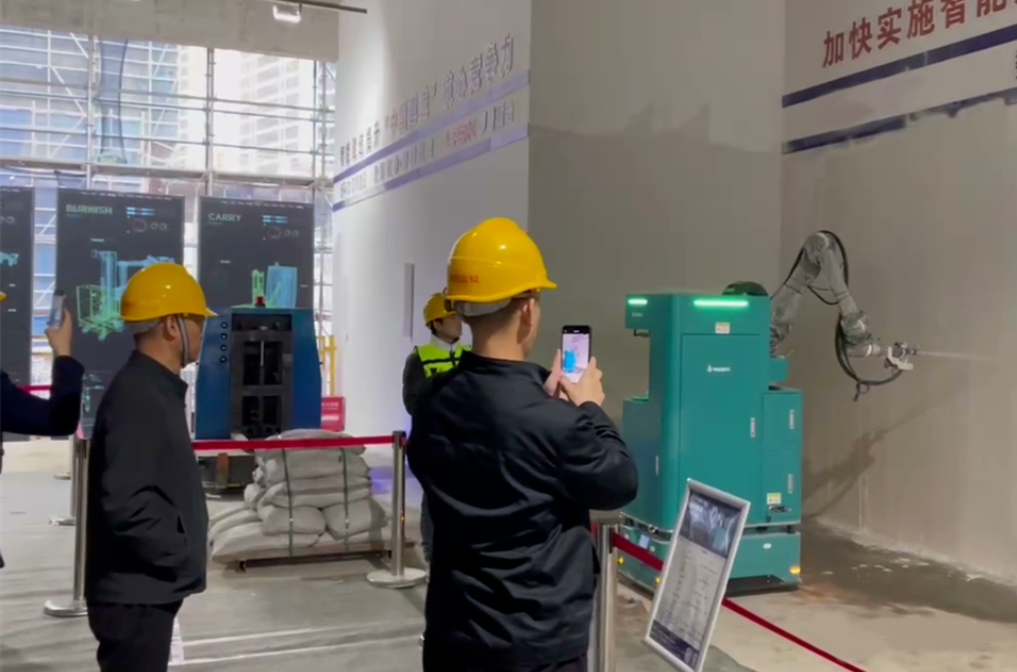
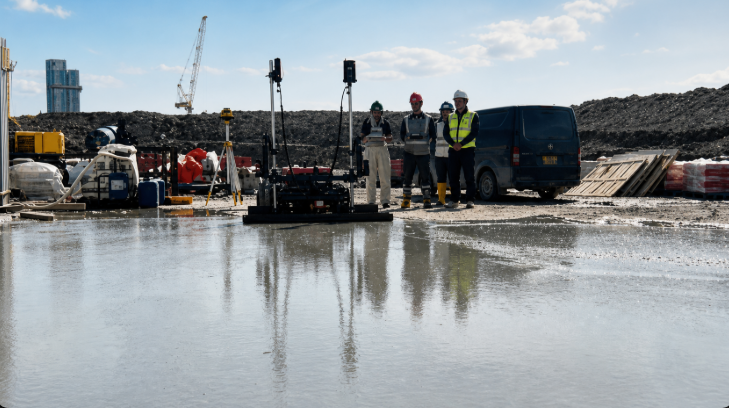
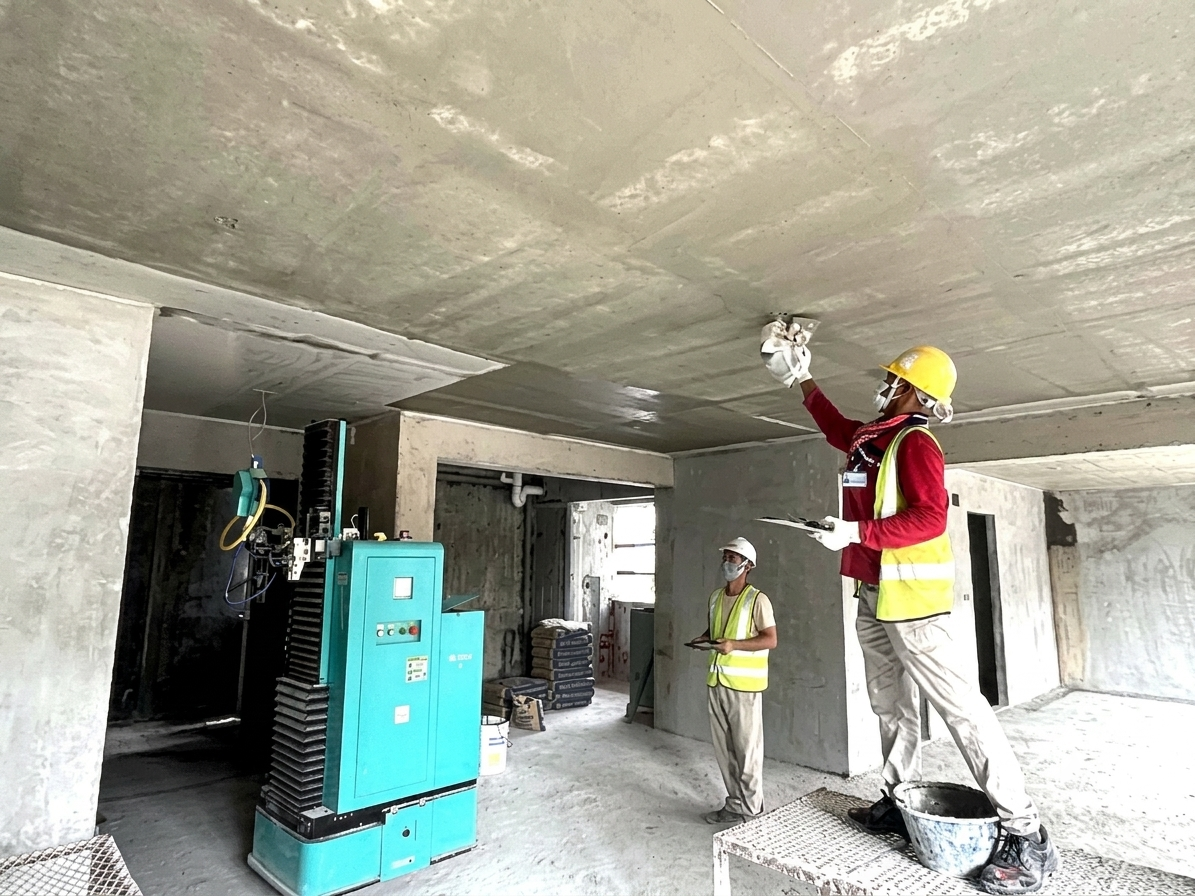
Technologies that once required long payback periods—robotic plastering, automated screeding, AI-based inspection—are now financially viable much faster.
For many firms, the math has shifted from:
- “Maybe in a few years”
→ to - “Why aren’t we doing this now?”
Why Automation Is Gaining Ground So Quickly
This shift isn’t happening because technology suddenly improved overnight.
It’s happening because three pressures are converging at once:
1. Quality Expectations Are Rising
Singapore’s standards, including CONQUAS, leave little room for inconsistency. Automation helps deliver repeatable, predictable results.
2. Safety Is Non-Negotiable
Reducing human exposure to physically demanding or hazardous work is no longer just good practice—it’s expected.
3. Time Is Money (More Than Ever)
Delays are expensive. Machines don’t fatigue, don’t slow down, and can operate beyond standard working hours.
Put simply:automation solves multiple problems at once.
A Rare Window of Advantage
What makes 2026 different isn’t just demand, or technology, or policy.
It’s the alignment of all three.
- Strong project pipeline
- Structural labor shortage
- Direct government subsidy
This combination is rare—and temporary.
Early adopters aren’t just saving costs. They are:
- reshaping how projects are delivered
- improving margins under pressure
- positioning themselves for future tenders
What This Means in Practical Terms
For construction firms in Singapore, the conversation is shifting.
It’s no longer about whether automation is “worth exploring.”
It’s about how quickly it can be integrated.
Because the companies that move earlier will likely:
- recover costs faster
- operate more efficiently
- compete more effectively in a tightening market
Conclusion: From Option to Expectation
Singapore’s construction sector in 2026 marks a transition point.
Automation is no longer a forward-looking investment.
It is becoming part of the baseline.
And with government support covering up to half the cost, the barrier to entry has never been lower.
The question now isn’t whether the industry will change.
It’s who adapts first—and who gets left behind.
 P600 Max: 5-in-1 Autonomous Robot Reshaping Building Finishing
 Can the Five-in-One Multi-Functional Coating Robot Scale Fast in Southeast Asia?